

The stars of Google Maps have become one of the most influential factors when deciding where to shop, eat or hire a service. Before even visiting a website or talking to a company, users look at its Google rating and the reviews that other customers have left.
In fact, numerous digital marketing studies show that most consumers trust online reviews almost as much as a personal recommendation. So going from an average rating of 3.8 to 4.3 stars can make a huge difference in clicks, visits and sales.
However, improving the score in Google Maps is not simply asking for more reviews at random. It is about applying a digital reputation strategy combining customer experience, active feedback management and intelligent automation.
In this article we will look at how to upgrade stars on Google Maps, What factors really influence your score and what strategies companies are using today to improve their online reputation on an ongoing basis.

How the Google Maps star system works
Before trying to improve your business rating, it is important to understand how Google calculates the score on your listing.
Scoring is based on the average of all the reviews that users leave on your site. Google Business Profile. Each review includes a rating between 1 and 5 stars, and Google automatically calculates the overall average. However, although mathematically it is a simple average, in practice there are several factors that influence how this score evolves and how it is interpreted by Google's algorithm.
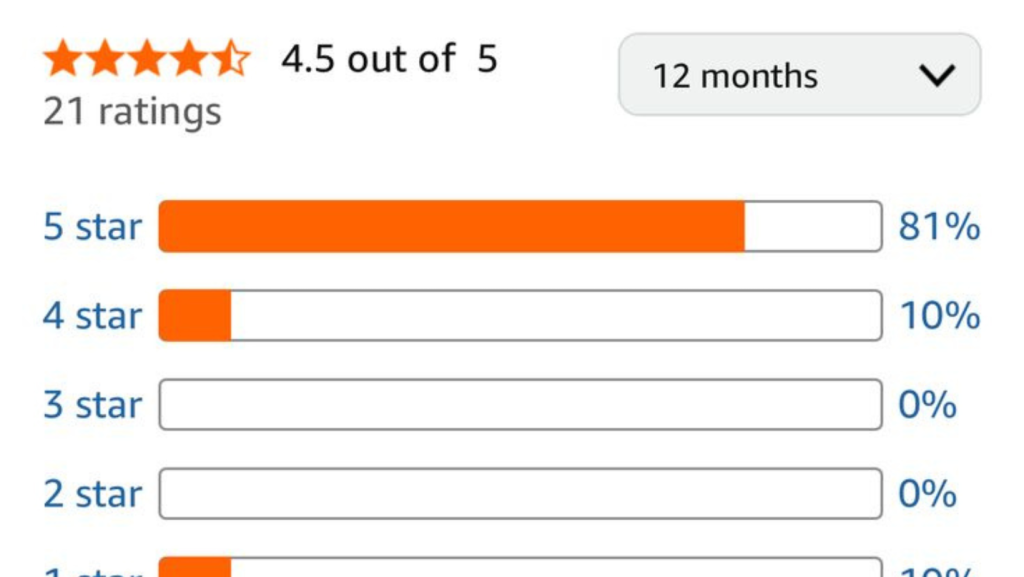
One of the most important factors is the total number of reviews. It is not the same to have a 4.5 star rating with ten reviews as with five hundred. The more reviews a business accumulates, the more credibility it conveys to both users and the search engine itself. In addition, a high volume of reviews reduces the impact of an isolated negative review.
It also influences the frequency with which you receive new reviews. Google values active profiles, i.e. those that consistently receive recent reviews. A business that accumulates many reviews in a short period of time and then goes months without receiving any loses relevance compared to others that maintain constant activity.
Another relevant aspect is the quality of the content of the reviews. Detailed comments, describing the customer experience and mentioning aspects of the service or product, provide much more value than short reviews such as “everything perfect” or “very good”. Such reviews help prospective customers make decisions and can also contribute to local search rankings, as they include words related to the business.
Finally, Google also notes business interaction with reviews. Businesses that respond to comments, welcome positive feedback and handle reviews well generate more trust. For the user, this conveys professionalism; for Google, it indicates that the profile is active and managed.
Understanding how this system works is crucial because it allows you to design a realistic strategy to improve your average score and move up in star rating on Google Maps.

Effective strategies to rank higher on Google Maps
Improving a business' Google Maps score does not depend on a single factor. Businesses that manage to maintain ratings above 4.5 stars often apply a combination of best practices focused on customer experience and active review management.
One of the most important elements is ask for reviews at the right time. Many businesses ask for reviews too late or in an unstrategic way. The best time to ask for a review is right after a positive experience: when the customer has completed a service, received their order or had a satisfactory interaction with the business. At that time, the likelihood of leaving a positive review is much higher.
Companies often do this through follow-up emails, automatic messages after a purchase, direct links to the Google listing or even QR codes in the shop itself. The key is to make it quick and easy for customers to leave feedback.
Precisely because of this, facilitating the process of leaving a review is another determining factor.. Many customers are willing to share their experience, but give up if the process requires too many steps. Ideally, they should be able to directly open the window to write the review with a single click.
This is where many companies start using specific tools to manage their online reputation. Platforms such as wiReply, for example, allow you to automate and centralise the management of reviews from a single dashboard. This reduces friction for the user and considerably increases the number of reviews the business receives.
Another key element in improving the score is respond to all reviews, both positive and negative. When a customer sees that a company responds to reviews, they perceive that there is a real interest in the user's experience. In the case of positive reviews, a short response thanking the customer for the feedback helps to reinforce the relationship with the customer.
Negative reviews, on the other hand, need to be handled with special care. Ignoring them can convey a lack of interest, while responding defensively can make the situation worse. The best strategy is usually to respond politely, acknowledge the problem if it exists and offer a solution. In many cases, when a business handles a review well, the customer ends up rating the service positively and even modifies their review.
It is also important to understand that Most satisfied customers never leave a review on their own initiative.. They just get on with their day. That's why companies that manage to improve their score often identify their most satisfied customers and actively invite them to share their experience.
This can be done through satisfaction surveys, post-service email campaigns or loyalty programmes that encourage customers to leave feedback. Over time, this approach generates a solid base of positive reviews that improves the average score of the business.

Another fundamental point is managing unavoidable negative reviews correctly. Even the best businesses receive low ratings at some point. The key is not to avoid them altogether, but to balance them with a steady stream of positive reviews. When a business regularly receives new five-star reviews, the impact of an isolated negative review is significantly reduced in the overall average.
Moreover, actively working on online reputation not only improves the perception of the business, but also influences its visibility on Google Maps. When a user searches for local services - such as “restaurant near me”, “dental clinic in Madrid” or “hairdresser in Barcelona” - Google displays a prominent block known as a Local Pack, where the most relevant businesses are listed.
To determine which businesses appear in this section, Google takes into account several factors: relevance of the business, proximity to the user and online reputation. Within the latter factor, the average rating and the number of reviews play a key role. Businesses with more positive reviews and high ratings are more likely to appear in these featured positions.
For this reason, improving the Google Maps score not only has an impact on customer confidence, but also on the Local SEO. A profile with good ratings can attract more clicks, more calls and more physical visits to the business.
As a business grows, managing all the reviews manually can become complicated. Asking for feedback, responding to comments and analysing online reputation takes time and organisation. That's why many businesses are starting to use tools that automate part of this process.
Review management platforms allow you to automatically solicit reviews after a purchase or service, centralise feedback from different platforms, respond faster to customers and analyse trends in customer satisfaction. Such solutions help transform review management into an ongoing system, rather than relying on one-off actions.
In this context, tools such as wiReply allow businesses to improve their digital reputation using automation and artificial intelligence. Instead of waiting for customers to leave a review on their own initiative, it is possible to create a steady stream of requests to satisfied customers, which increases the number of positive reviews and helps to progressively raise the average score on Google Maps.
Conclusion
Moving up the star rating on Google Maps doesn't happen by chance. It is the result of an online reputation strategy based on generating positive experiences, asking for reviews at the right time and actively managing customer relationships.
Businesses that manage to maintain high ratings understand that each review is an opportunity to improve their image and strengthen the trust of future customers. Over time, a steady stream of positive reviews not only improves the average rating, but also increases the visibility of the business in local searches.
If you want to simplify this whole process and start generating more positive reviews on a consistent basis, tools such as wiReply allow you to automate the solicitation and management of reviews to improve your online reputation.
You can try it with its START FOR FREE and start uploading your stars on Google Maps today.