
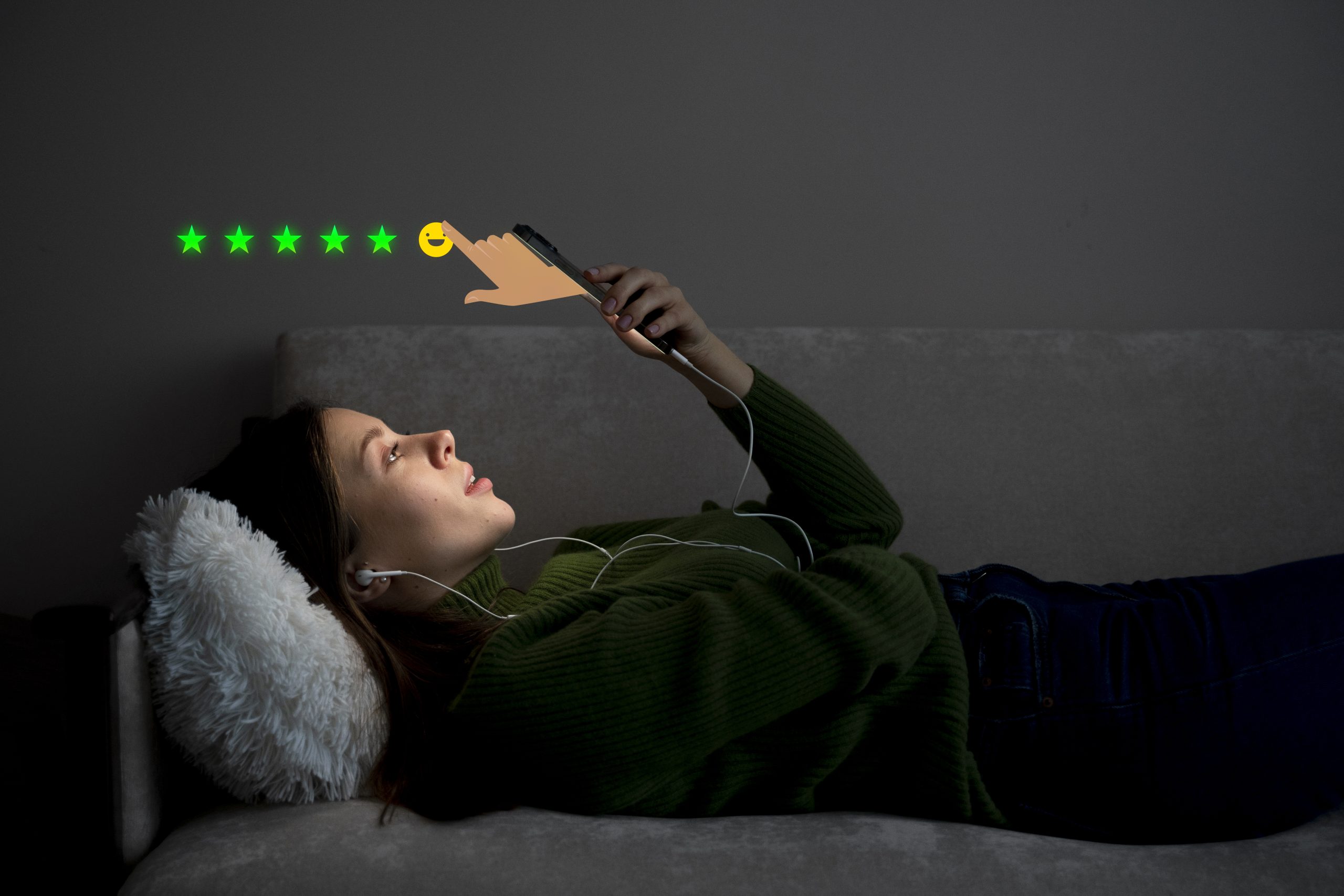
Before choosing a business, users read reviews. They do not do so superficially or randomly: they analyse, compare and filter them unconsciously in search of signals that help them make a confident decision. Trust is not only generated by a high score, but by the type of comments that accompany that rating. Language, text length and specific mentions of services directly influence how the brain interprets the credibility of a review.
Understanding the psychology behind this behaviour is key for any business that wants to improve its online reputation and turn reviews into a real marketing and conversion asset.
How the human brain processes online reviews
Users reading reviews are not looking for perfect information, but for coherent and credible information. From a psychological point of view, reviews function as a form of social proof: if other people have had a positive experience and describe it in detail, the brain reduces the perception of risk.
Moreover, the user does not usually read all the available reviews. He scans, selects a few at random and pays particular attention to those that seem “real” to him. This explains why some reviews are much more trustworthy than others, even within the same review. Google profile.

Language: naturalness versus exaggeration
Why we are wary of over-perfect reviews
Excessively enthusiastic language, full of generic adjectives and without nuance, sets off the reader's alarm bells. Phrases such as “everything was amazing”, “the best service in the world” or “100 % recommended with no regrets” can be positive, but also not very credible if they are not accompanied by context.
From cognitive psychology, the brain tends to distrust extremes. Reviews that include small nuances, specific details or even mild criticism are often perceived as more honest and therefore more reliable.
The value of everyday language
The reviews that generate more confidence They use a language that is close to you, similar to what a person would use when telling a friend about his or her experience. They do not try to sell, but to explain. This type of writing reduces emotional distance and makes the reader identify with the writer.
For businesses, this means that it is not enough to simply respond to reviews, but to do so in a way that respects that natural tone. Automating responses without losing authenticity is one of the biggest challenges today, and this is where artificial intelligence, when applied properly, makes a difference.
The length of the review: neither too short nor too long
Short reviews: useful, but limited
A short comment such as “All good” or “Good service” provides some value, but generates little trust on its own. The brain needs more information to build a clear mental picture of the experience. These reviews help to add volume, but they are not the most influential in the final decision.
Average reviews: the sweet spot of credibility
The reviews that tend to generate the most trust are of medium length: they explain what was contracted, what the process was like and what the outcome was, without going into an excessively long narrative. This balance allows the reader to get context without feeling that the text is contrived or forced.
From a local SEO point of view, these types of reviews also bring more semantic signals to Google, especially when they include real services, locations or situations.
Very long reviews: authority... with nuances
Lengthy reviews can convey a lot of authority, especially for complex or high-value services. However, not all users read them in full. Their impact tends to be greater on profiles that already have a solid base of opinions and where the reader is looking for confirmation rather than basic information.

The importance of mentioning specific services
How keywords work in the user's mind
When a review mentions a specific service, For example, “Google review management”, “quick response to negative comments” or “after-sales service”, the reader's brain automatically connects that experience with his or her own need. This effect increases the perceived relevance of the comment.
In addition, these mentions help to differentiate the business from competitors with similar ratings, providing clarity on exactly what is done and how it is done.
Dual benefits: trust and positioning
Reviews that include specific services not only influence user psychology, but also Google's algorithm. They reinforce the relevance of the profile for certain searches and help to better position the business in its category.
Encouraging detailed reviews, without forcing it, is therefore a key strategy for any business that wants to grow sustainably.

The role of business responses in psychological perception
Responding well builds more confidence than not responding at all
A review, positive or negative, does not end when the customer posts a comment. The business response is part of the content that the user evaluates. Polite, empathetic and contextualised feedback reinforces the perception of professionalism and control.
From a psychological point of view, the reader interprets these responses as a sign that the business listens, is involved and cares about its reputation.
Consistency and tone: keys to not breaking trust
Generic, repetitive or overly corporate responses can break the positive effect of a good review. Maintaining consistency of tone is essential, especially as the volume of feedback grows.
Tools such as wiReply allow you to respond to Google reviews with artificial intelligence while maintaining a natural style, adapted to the content of the comment and aligned with the voice of the brand. This helps to scale management without losing credibility or proximity.
Common mistakes that reduce user confidence
One of the most common mistakes is to focus only on the average score and neglect the quality of the content. Another common mistake is to respond defensively to criticism or to ignore it altogether. Both behaviours generate mistrust and increase the perception of risk.
It is also a mistake not to analyse reviews from a psychological perspective: to understand what words are repeated, what details customers value and what kind of comments most influence the purchasing decision.

Conclusion: trust is built with words, not just stars.
The reviews that generate the most trust are not the most perfect, but the most human. Natural language, balanced length and concrete mentions of services help the user to imagine the experience and reduce their doubts. Understanding this psychology allows businesses to not only improve their online reputation, but also to use reviews as a strategic conversion tool.
If you want to manage and respond to your Google reviews in a consistent, human and scalable way, wiReply helps you do this with artificial intelligence, maintaining the right tone and boosting user confidence.
Try wiReply for free and start turning your reviews into a real competitive advantage.