
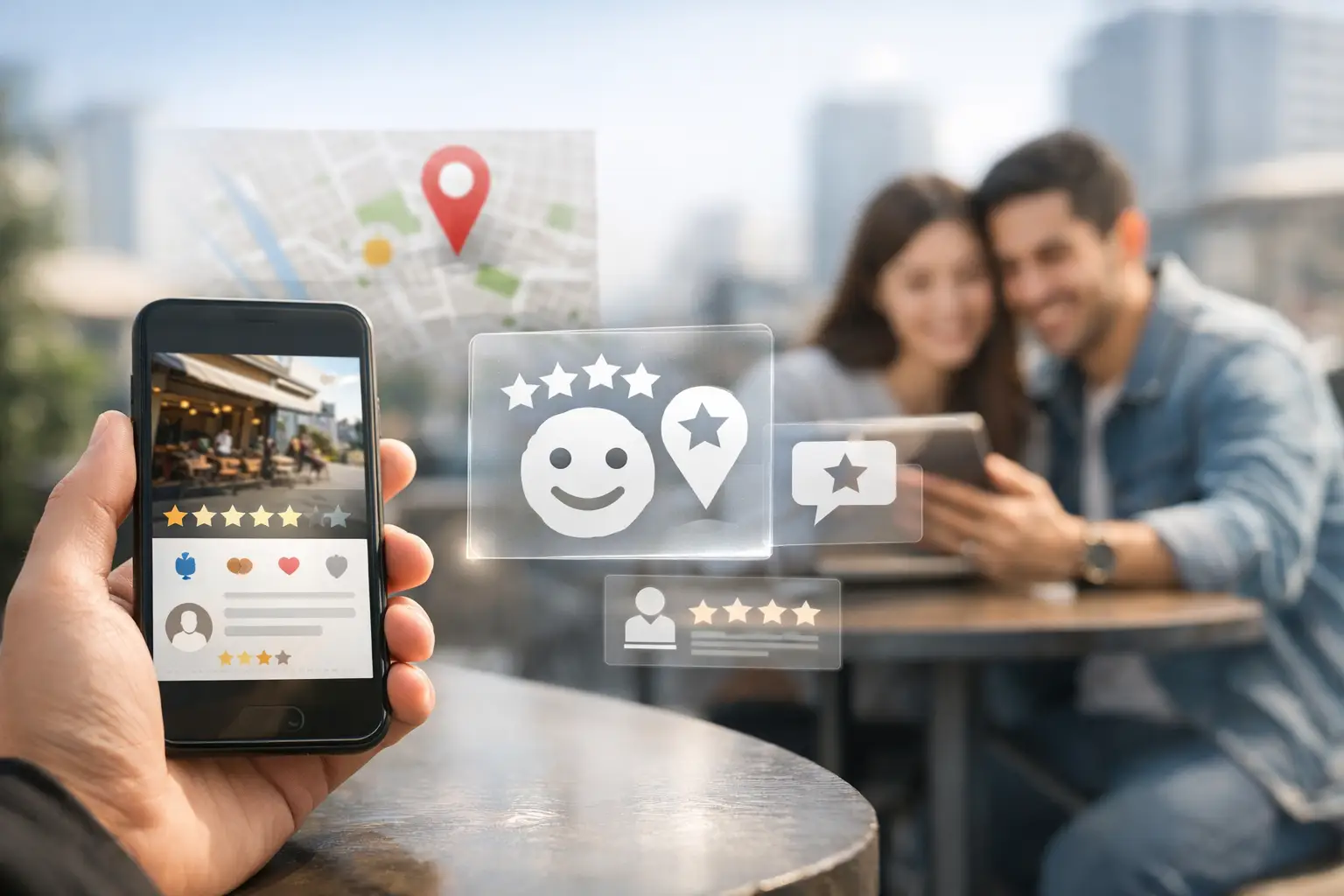
A one-star review about a long wait can put off bookings for days. Ten comments repeating the same problem can signal an operational failure that doesn't yet show up on any internal report. The Local Reviews Trends 2026 turn this channel into a direct source for engagement, customer experience, and business decisions.
For a restaurant, gym, or chain of workshops, Google Maps reviews are no longer just a matter of image. They influence clicks, calls, directions to the premises, and bookings. The difference lies in managing this conversation quickly, with discernment, and with comparable data across locations.
Local review trends in 2026 affecting business
The response speed will be a basic expectation
Customers expect a response when their experience is still fresh. An unanswered negative review conveys a lack of control. A generic response, sent several days later, can be just as cold. In 2026, responding quickly will cease to be a differentiator and will become the minimum operational requirement for any competitive local business.
The challenge isn't to respond for the sake of responding. A local business with few reviews can respond manually. A company with 30, 100, or 500 locations needs to maintain short response times without losing brand tone or overloading teams. Automation with artificial intelligence allows for covering that volume, but it must be configured with clear rules: what is responded to automatically, when a case is escalated, and who intervenes in a sensitive incident.
A complaint about a faulty product, poor service, or incorrect charge doesn't deserve a template. It needs context, a contact channel, and follow-up. Automation should free up time for these cases, not hide them.
AI transitions from drafting responses to detecting causes
Responding to reviews with AI saves time, but that's only the first level. The real value appears when the platform identifies recurring themes, analyses sentiment, and separates an isolated criticism from a pattern affecting multiple locations.
If customers from different points of sale mention waiting times, stock shortages, cleanliness, noise, or difficulties booking, this information should not remain on the Google listing. It needs to be passed on to operations, marketing, or management with a clear analysis. What is happening, in which locations, how often, and how is it evolving after measures have been taken.
This capability will be particularly relevant in multi-site businesses. The average star rating offers too narrow a view. Two venues could have a 4.4, but one receives constant reviews about service and the other about price. The improvement plan cannot be the same.
Benchmarking between local businesses is gaining importance.
Comparing reputation across locations helps to identify good, replicable practices and issues requiring intervention. In 2026, the most efficient chains will not only measure the number of reviews they receive. They will measure response rate, average response time, most frequently mentioned themes, sentiment evolution, and the performance of each point of sale.
This analysis avoids decisions based on perceptions. If a franchise improves its valuation after adjusting reception shifts, that learning can be transferred to other centres. If a location receives many negative reviews after a change of supplier, management can act before the impact spreads.
The comparison must be fair. It's unreasonable to demand the same volume of reviews from a shopping centre store and a street-level establishment with different opening hours. What's useful is to compare similar locations, observe trends, and relate reputational data to real-world operations.
Generating more reviews will remain necessary, but with traceability
Businesses that rely on local traffic need a continuous intake of feedback. Asking for reviews only when the average dips creates artificial peaks and doesn't build a solid reputation. The goal is to integrate the request at the right moment in the experience: after a satisfactory purchase, upon completion of a service, or after a stay.
Personalised NFC cards and codes that lead directly to the review page reduce friction. The customer holds their phone close and can leave their opinion in seconds. However, ease does not substitute for the experience. If the service has failed, an NFC card will not solve the problem. First, the cause must be corrected; then, it should be made easy for satisfied customers to share their genuine experience.
Traceability will be a practical advantage. Knowing which employee, shift, or location generates the most reviews allows for the recognition of good practices and the identification of training opportunities. It's not about pressuring the team to get stars. It's about understanding which behaviours improve customer perception and repeating them.
What changes in local review management in 2026
Reputation management is no longer an isolated marketing task. It affects customer service, operations, store managers, franchisees and management. Therefore, the model based on reviewing records once a week no longer works when managing multiple locations.
The change involves centralising without losing local control. The brand needs a global view of its Google Business Profiles, while each establishment must be able to identify its specific issues and act upon them. A useful response for a hotel does not have the same approach as a response for a car repair shop, even though both must maintain the brand's identity.
The need for a consistent voice also grows. Consumers quickly detect when a company responds with copied, overly defensive, or hollow texts. AI can adapt language to tone, topic, and sector, but it must respect approved expressions, legal boundaries, and the level of approachability defined by the company.
Consistency does not mean absolute uniformity. A five-star review with a comment about the team's friendliness deserves specific thanks. A criticism for a bad experience needs acknowledgment, accountability, and a concrete proposal to continue the conversation offline. The response should feel written for that customer, not for any customer.
Google Maps will require more credible local signals
Local visibility is built on multiple factors, but reviews provide signals of relevance and activity. A profile with recent opinions, helpful responses, and up-to-date information conveys that the business is active. This can influence trust even before the user visits the website or enters the premises.
Quality will continue to outweigh shortcuts. It is not advisable to condition the request for reviews to customers who are likely to rate highly, nor to offer incentives in exchange for opinions. These practices damage credibility and can lead to problems with platform policies. The sustainable strategy is to ask for genuine opinions from all customers in a clear and simple way.
Furthermore, local reputation has a competitive dimension. When several businesses offer similar prices and services, a difference of tenths in their rating, a higher volume of recent reviews, or a more thoughtful response can sway the decision. In high-frequency sectors, this difference translates into repeat visits.
How to prepare a strategy that scales
The first step is to define a useful dashboard. It is not enough to simply track the average score. It is advisable to review the volume of new reviews, the response rate and time, the distribution by stars, the main positive and negative themes, and the comparison between establishments. Each indicator should answer an operational question.
The second step is to design response flows. Positive feedback can receive personalised automated replies within a validated tone. Minor criticisms may require a quick review. Serious accusations, security concerns, mentions of personal data, or payment issues must be escalated immediately to a manager.
The third step is to connect the Reviews with actions. If semantic analysis shows that complaints about waiting times increase every Friday, staff planning needs to be reviewed. If product quality receives consistent praise, that message can reinforce local communication. A review is not a vanity metric: it's an operational signal.
For chains and franchises, technology prevents this discipline from relying on spreadsheets, internal emails, and scattered reviews. A solution like wiReply centralises management, automates responses with a configurable tone, and converts thousands of comments into actionable information by location, area, and period.
The objective for 2026 isn't to respond faster for the sake of it. It's to turn every review into an opportunity to protect revenue, improve experience, and make every location compete better on Google Maps. When reputation is managed with data and tracking, the customer notices the change before the monthly report.