
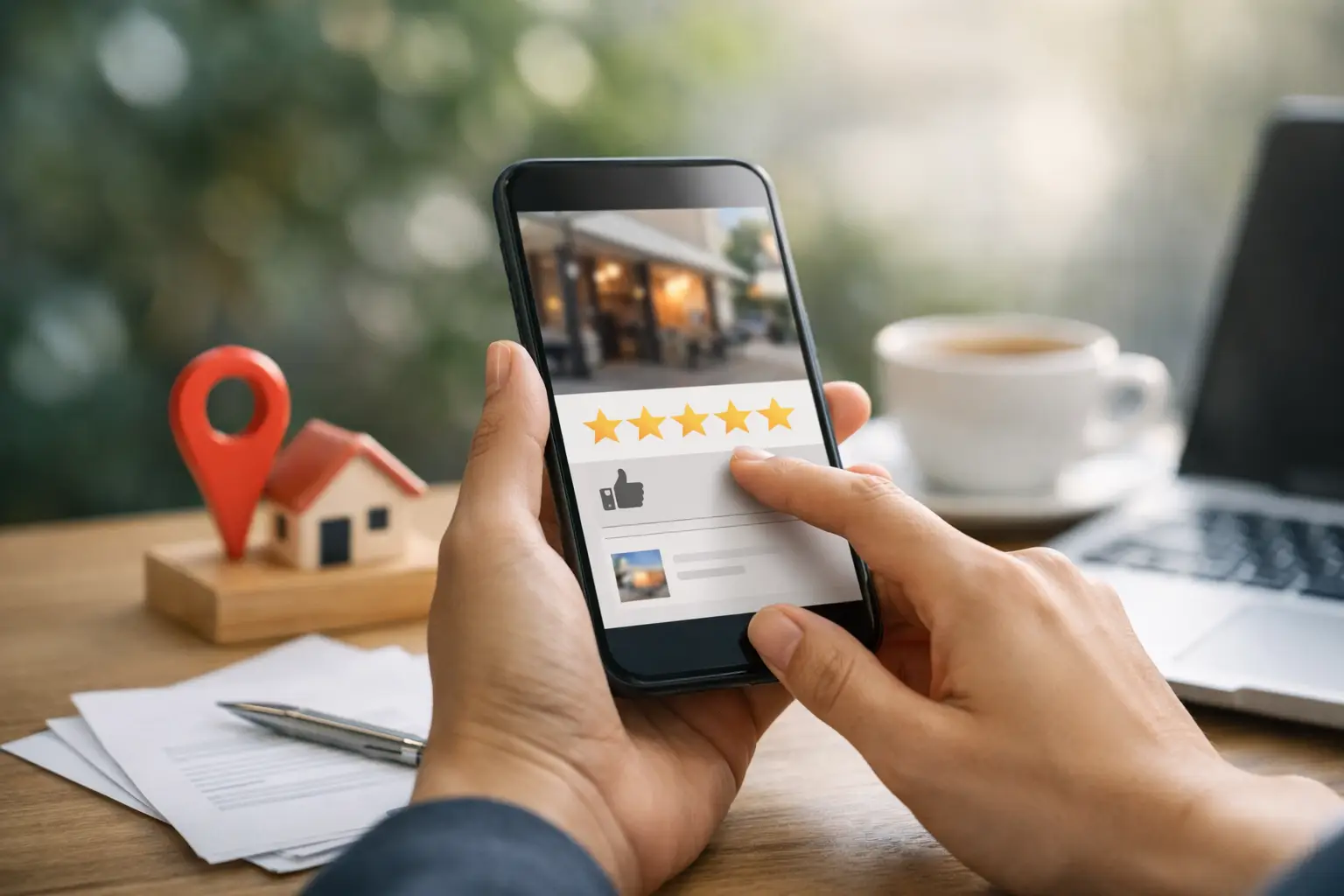
A one-star review doesn't arrive on its own. It is usually the final step of a poor wait time, inconsistent service, an unresolved issue or a poorly managed expectation. Techniques for improving local ratings work when they act before, during and after that experience. The goal is not to fake the score. It is to detect what is holding back satisfaction, correct it location by location and get satisfied customers to talk about it on Google.
For a restaurant, a gym, a hotel or a retail chain, local reputation has a direct impact on a concrete decision: to visit, book, make an appointment or keep looking. Google Maps displays stars, review volume, responses and activity signals before the customer even knows the business. That is why managing reviews must be part of daily operations, rather than a pending marketing task.
Start by measuring the reality of each premises
An overall average rating can hide a serious problem. A chain with 4.4 stars may have excellent branches and others losing demand due to a low score, few recent reviews or repeated comments about service. The unit of analysis must be each location, each period and each reason for satisfaction or criticism.
Check the average rating, but do not stop there. Look at the volume of new reviews, the monthly trend, the response rate, the response time, the most mentioned topics and the sentiment associated with each one. If cleaning complaints increase in two centres, it is not an isolated reputational issue. It is an operational signal that requires owners, a correction date and follow-up.
It is also advisable to compare similar premises. An urban establishment should not be measured in the same way as a tourist one, but two points of sale with similar opening hours, offerings and customer flow do make it possible to identify actionable differences. The internal benchmarking eliminate excuses and reveal practices that can be replicated.
Ask for reviews at the right time
Many businesses ask for reviews too late, with generic messages or when the customer has already forgotten the experience. The best time is right after resolving the need that motivated the visit: when closing a repair, after finishing a satisfying meal, at the end of a stay or after a positively rated class.
The request must be simple, direct and legitimate. A visible QR code on the counter, an NFC card handed over by the team or a post-purchase message help reduce friction. The customer should not have to search for the business listing or follow multiple steps to leave their review.
The key is to ask all customers for feedback, without filtering by their potential satisfaction. Selecting only those who seem happy can undermine credibility and does not solve real problems. Instead, the constant collection of opinions generates a more representative volume and reduces the impact of an isolated criticism.
Make the team part of the result
Review generation improves when staff understand why it matters and know when to ask. It is not enough to put up a QR code and hope for results. Train the team with a natural phrase, tailored to the moment of service: if the experience has been a good one, we would really appreciate it if you could share it on Google.
Tracking by employee, shift or premises helps to recognise good practices without turning the request into uncomfortable pressure. If a team achieves more reviews and maintains a good rating, analyse what they do differently: perhaps they ask for feedback at the right moment or resolve issues better before saying goodbye to the customer.
Reply quickly, but with judgment
Responding to reviews conveys presence and attention. It also offers a second opportunity in the face of criticism. However, a poorly conceived automated response can make the problem worse. Identical phrases, hollow apologies or promises that are impossible to keep make the brand seem distant.
Responses must maintain a consistent tone, mention the specific aspect of the experience and, when there is an issue, open a clear channel to resolve it. In a positive review, thank the customer for the detail they highlight. In a negative one, acknowledge the situation without arguing or blaming the customer, explain the willingness to review it and facilitate the next step.
Speed matters especially with recent negative reviews. A response within the first 24 or 48 hours reduces the feeling of abandonment and allows action to be taken while the context is still available to the team. Even so, not everything should be answered in the same way. A complaint about a charge requires information to be verified. A serious accusation may require internal review before publishing any message.
The automation with artificial intelligence It brings efficiency when working with clear rules: brand tone, data for each location, types of issue and approval workflows. This enables high-volume responses without losing control. Platforms like wiReply allow you to centralise this flow and adapt responses to the context of each review.
Transform feedback into operational improvements
Reputation management loses value if it ends with publishing a response. Every comment contains information about processes, product, customer service and expectations. The useful work begins by classifying those signals and deciding what needs to change.
Look for patterns, not anecdotes. Three comments about excessive waiting times in a week deserve attention, even if the average score remains high. Similarly, if customers repeatedly highlight a specific employee, a particular speed or the quality of a product, there is a practice worth standardising.
Assign each topic to a responsible area. Operations can review service times. Training can work on customer service. Maintenance can intervene regarding facilities. Marketing can correct expectations if the images, prices or descriptions on the listing do not match the real experience. Without internal owners, the sentiment analysis it becomes a pretty report and nothing more.
Close the improvement loop
Define a periodic review per location. There is no need for an endless meeting. A few minutes are enough to answer three questions: what has worsened, what is recurring, and what concrete action will be taken this week. In the next cycle, check whether the comments and the score reflect the change.
This method makes it possible to distinguish between perception and outcome. If staff are reinforced during peak hours but reviews still mention slowness, perhaps the problem lies in task allocation, the payment process, or an unrealistic service promise. Local reviews help to find the cause, not just measure the symptom.
Treat your Google listing as a commercial asset
A good experience can lose its impact if the Google listing shows incorrect opening hours, outdated phone numbers, old photos or replies with no activity for months. Basic information should be checked frequently, especially for multi-site businesses where operational changes do not always reach the digital team.
Images also condition expectations. A hotel must clearly show its current rooms and communal areas. A garage must reflect its actual services. A restaurant should avoid photographs that promise an experience different from the one it can offer. The greater the consistency between the listing and the visit, the lower the risk of frustration.
Do not chase a perfect score. A credible average, recent reviews, helpful responses and an improving trend build more trust than an artificial reputation. Furthermore, a well-managed complaint can demonstrate more professionalism than ten generic replies to positive comments.
Techniques for improving local reviews require consistency
The result does not depend on a one-off campaign. It depends on integrating review requests, quick responses, feedback analysis and operational correction into a measurable routine. Each location needs visibility over its performance, and management needs a consolidated view to prioritise resources.
Start with a simple change this week: identify the main reason for criticism at each location, assign someone to be responsible, and make it easy for the satisfied customer to leave feedback directly. When the voice of the customer enters the operation, ratings stop being a public scorecard and become a real lever for local growth.