
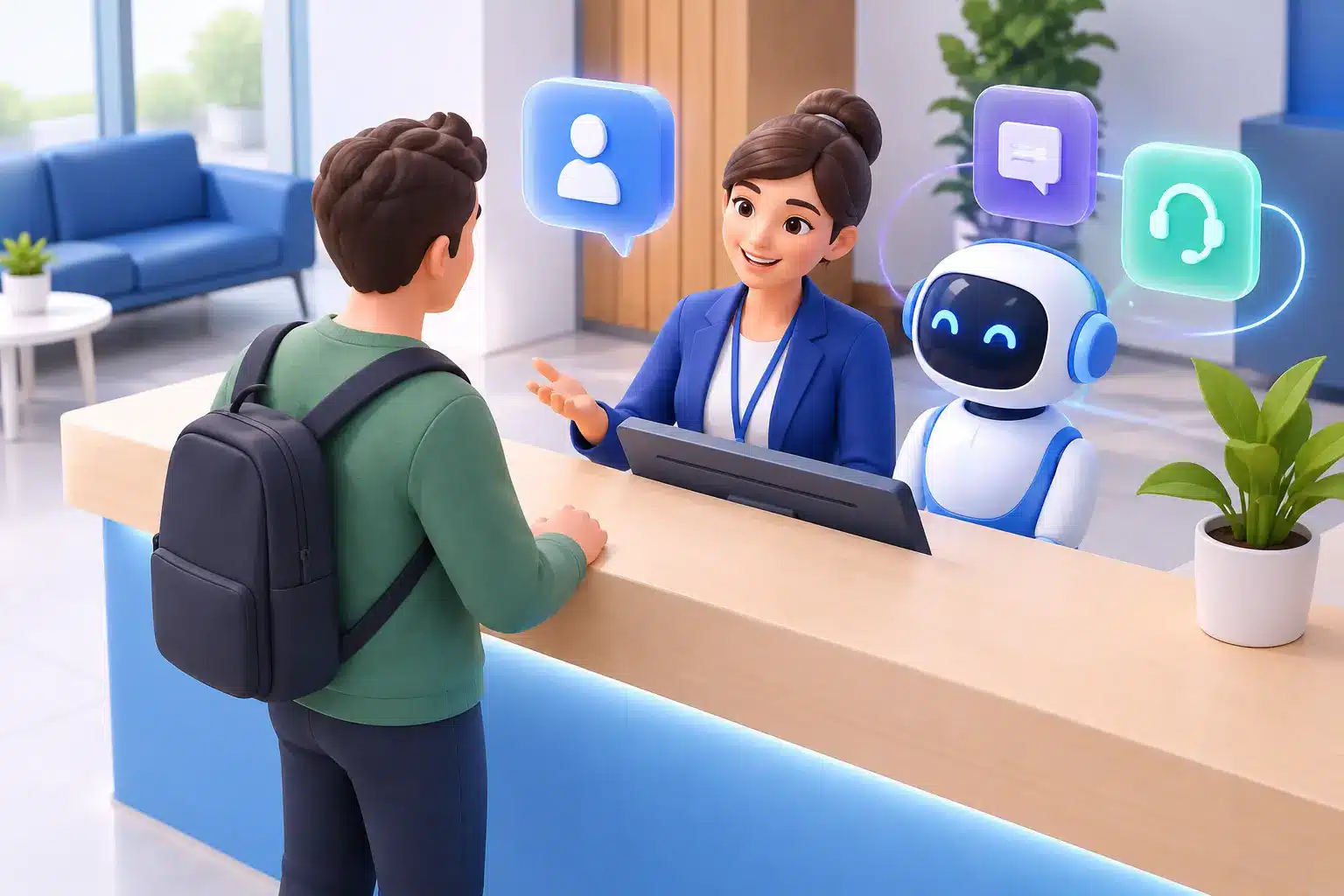
A customer does not separate what they experience in the physical space from what they post on Google afterwards. If they waited too long, received a poorly-explained response, or found a helpful team, that experience will ultimately influence their next search. Generative AI for in-person engagement enables them to connect these two moments: improving face-to-face interaction and turning every comment into an actionable action.
For restaurants, hotels, gyms, workshops, stores, and chains with multiple locations, the challenge isn’t just about providing great service. It’s about doing it consistently, detecting errors before they happen again, and protecting a local reputation that affects visits, bookings, and sales. Technology doesn’t replace the team. It provides information, context, and speed to work better.
In-person attention remains human, but it no longer has to be blind.
Most of the information about a visit is lost when there is no method to collect and analyze it. A manager may intuit that there are waiting problems on Saturdays, that one branch receives praise for its service, or that a promotion creates confusion. Without comparable data, those signals remain in isolated conversations.
Generative AI changes that scenario by reading thousands of reviews., categorize topics and summarize patterns that a team would hardly detect in time. It’s not limited to counting stars. It differentiates between criticism regarding service time, product quality, cleanliness, the treatment received, or the payment process. It also identifies which aspects lead to repeated recommendations.
The result is more informed in-person attention. The operations manager can prepare the team before a demanding shift. The marketing manager can check if a campaign is delivering on its promises at the point of sale. And the management can compare locations under the same criteria, without relying on manual reports or scattered opinions.
Generative AI for in-person care starts with the customer's voice
Reviews are one of the most honest records of the in-person experience. They come with recent memories and often with specific details: a table that took a long time to be served, an advisor who explained a repair well, a sloppy dressing room, or an excellent welcome at reception.
The problem arises when those reviews are answered late, are answered with generic templates, or are not even analyzed. A correct response can contain the reputational damage of an incident. But a structured reading of all the responses prevents the incident from becoming a pattern.
AI can generate response drafts tailored to the brand tone, the content of the review, and the rules defined by each business. This reduces the workload for the team and speeds up response times. However, not all responses should be automated without review. A serious accusation, a conflict with a customer, or a review that mentions personal data requires human judgment and an escalation protocol.
The real advantage lies in combining automation and control. The platform proposes, the team validates when necessary, and the company maintains a consistent voice across all its points of sale. In a chain, that consistency prevents each location from improvising its own way of handling delicate situations.
From the review to the operational decision
An individual review rarely defines an operation. Twenty similar comments over a month should do the same. Generative AI provides value when it converts free text into clear signals to take action.
If several customers mention slow checkouts between 2:00 and 3:00 PM, it’s not enough to respond that they’re sorry for the wait. It’s worth reviewing staff planning, order flow, or the checkout process. If a hotel accumulates positive feedback on front desk service, that behavior can be documented and replicated in other establishments. If a car dealership receives recurring questions about budgets, it can improve the sales pitch and clarity of its budgets before trust is eroded.
This approach avoids purely reactive reputation management. Each review no longer remains a pending task but becomes a useful asset for operations, training, and customer experience. The impact is measured in fewer friction points, more consistency, and a greater likelihood of receiving positive reviews on a sustained basis.
What a physical presence company should measure
Average score matters, but it alone does not explain what is happening. A business can maintain a high score and lose customers due to a specific cause that does not yet have enough volume to affect the average. That is why it is advisable to cross-check the rating with topics, sentiment, temporal evolution, and comparison between locations.
Response speed is also relevant. A negative review without a response conveys disinterest, while a quick and specific response demonstrates follow-up. It’s not about responding out of habit. It’s about recognizing the problem, explaining the next step when necessary, and maintaining a communication aligned with the brand.
In multi-site networks, the Benchmarking between locations It helps to identify differences that deserve attention. If one point of sale receives more positive mentions about advice than another, the management can review processes and share good practices. If a location focuses on cleaning criticism, the priority should be operational, not communicative.
It is also necessary to measure the generation of new reviews. Asking for feedback at the end of a good in-person experience works better when the process is simple, visible, and respectful. Customized NFC card, For example, it reduces steps for the customer and allows results to be attributed to an employee or establishment. The key is to request authentic reviews, without conditioning the content or offering incentives in exchange for a positive rating.
Where it provides more value according to the sector
In restoration, AI helps detect issues related to time, service, reservations, quality, and ambiance. In hotels and tourism, it allows for tracking mentions related to check-in, rooms, breakfast, and staff service. In retail, it focuses on availability, advice, queues, and returns.
Gyms can identify friction points in cleaning, machine maintenance, classes, or front desk service. In automotive, the patterns are usually in budgets, deadlines, transparency, and the treatment during delivery. Each sector uses a different language, but the goal remains the same: understanding what the customer experiences in the establishment and what change can improve their next visit.
It is not advisable to impose the same reading on all businesses. A coffee chain needs to detect incidents very quickly and in large numbers. A dealership may analyze fewer reviews, but with deeper business implications. The configuration of categories, alerts, and response tone must respond to that reality.
How to implement AI without losing control
The best starting point is to define what decisions the company needs to make based on the feedback. It could be reducing complaints due to waiting times, improving consistency across franchises, improving the quality of responses, or increasing the volume of verified reviews. Without that priority, data accumulates without being turned into results.
Next, it is advisable to establish response rules. Which cases can be automated, which words trigger an alert, who approves sensitive incidents, and within what timeframe should action be taken. These rules do not hinder automation; they make it useful and safe.
A solution like wiReply centralizes Google Business Profile management, automates responses with configurable tone, and transforms review content into actionable analytics. For a marketing or operations team, this means less repetitive work and more capacity to compare locations, identify root causes, and act quickly.
Technology must be integrated into the business routine. A weekly review of the most recurring issues, an alert for spikes in negative sentiment, and location-based monitoring often generate more value than an extensive report that no one consults. AI offers speed. Improvement comes when someone makes decisions based on what that speed reveals.
The customer is already telling us what works and what holds it back. Listening to that information, responding with judgment, and turning it into visible improvements is one of the most direct ways to strengthen in-person engagement and grow in Google Maps.